
When I joined LinkedIn in 2016, I was managing Italian accounts using Sales Navigator and rolling out social selling programmes across mid-sized and enterprise clients.
At first glance, the job seemed easy.
But in reality, 70% of my accounts churned. 🫣
Seven out of ten customers left in the early days.
And yes, we were already paid on baseline plus upsell.
The incentive to grow accounts was there.
From the start, the team focused on expansion, almost as if we were account executives.
But the real problem was actually simpler.
You cannot upsell customers if they are not getting value.
In the beginning, we behaved as many early-stage teams do.
We pushed usage.
We also tried to add more seats.
But adoption was inconsistent. Onboarding went well, but usage dropped off over time.
Decision makers were not always involved. The sales team using our tools kept the status quo instead of embracing social selling.
When it was time for renewal, the question was both tough and fair.
“What did we actually achieve?”
Churn remained high.
Things only improved when we started treating churn as a structural issue.
We structured onboarding.
We created clear success plans and webinars for existing clients.
We held structured business reviews with actual decision makers.
We also got more honest about which accounts were a good fit and worked with our account executives on ideal customer profiles.
Churn stabilised over time.
After that, expansion started to happen naturally.
When customers succeed, they grow.
The order of these steps is important. 😅
The Bowtie model from Winning by Design makes this clear.
On the left side, you focus on acquiring customers. Marketing creates demand, and sales closes deals.
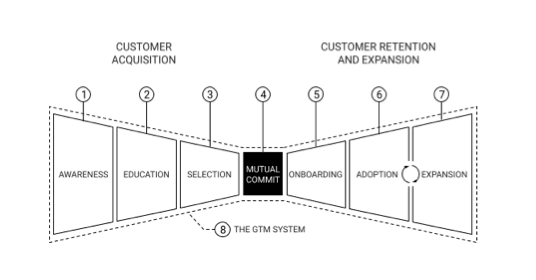
On the right side, the focus is on retaining and expanding those customers.
This is where revenue becomes more stable and predictable.
Most early-stage startups focus only on the left side: building more pipeline, running more demos, and making more hires.
But if you neglect the right side, growth feels fragile because every new deal just replaces one that was lost.
That makes things difficult.
In larger companies, roles are separated.
Customer Success Managers handle onboarding, drive adoption, deliver value, and protect gross revenue retention.
Their job is to make sure customers achieve the outcomes they were promised.
Account Managers focus on renewals, upselling, cross-selling, and planning for expansion.
In early-stage startups, one person often handles both roles, and that can work.
The real risk is not in combining roles.
If expectations are unclear, you end up with someone acting as support, answering support tickets every day instead of pushing NRR.
At LinkedIn, baseline plus upsell worked because the system was already strong and there was enough volume to absorb mistakes as we improved retention.
Early-stage startups do not have that kind of margin for error.
That is why I now prefer compensation based on Net Revenue Retention. (I changed my mind about this over time.)
NRR measures what happens to the same group of customers after churn, downgrades, and expansion.
You want of course NRR >105/110%.
From there, you multiply a quarterly bonus by the NRR achievement percentage, adjusting with accelerators or penalties as needed.
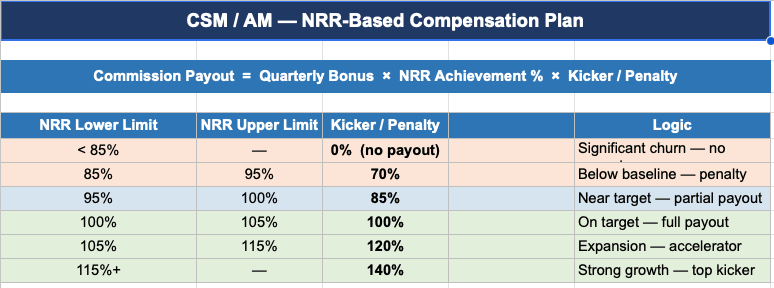
Retention might count for 80% of the bonus, with expansion making up the remaining 20%.
Bonuses are paid quarterly and measured against the starting group of customers. (baseline)
This encourage the right approach: protect your base first, then focus on growth.
If your annual churn is above 10 to 15%, the problem is not just your pipeline.
You have a post-sales structure problem (or a PMF problem, but that’s another story).
Strong CSM and AM teams help protect your company’s runway.
They increase customer lifetime value and help create case studies and referrals.
Build out the left side of the bowtie model, but treat the right side as a key part of your revenue engine.
Because without retention, you can acquire as many customers you want, you will lose at the end.
Thanks for reading this far, see you all next week!

